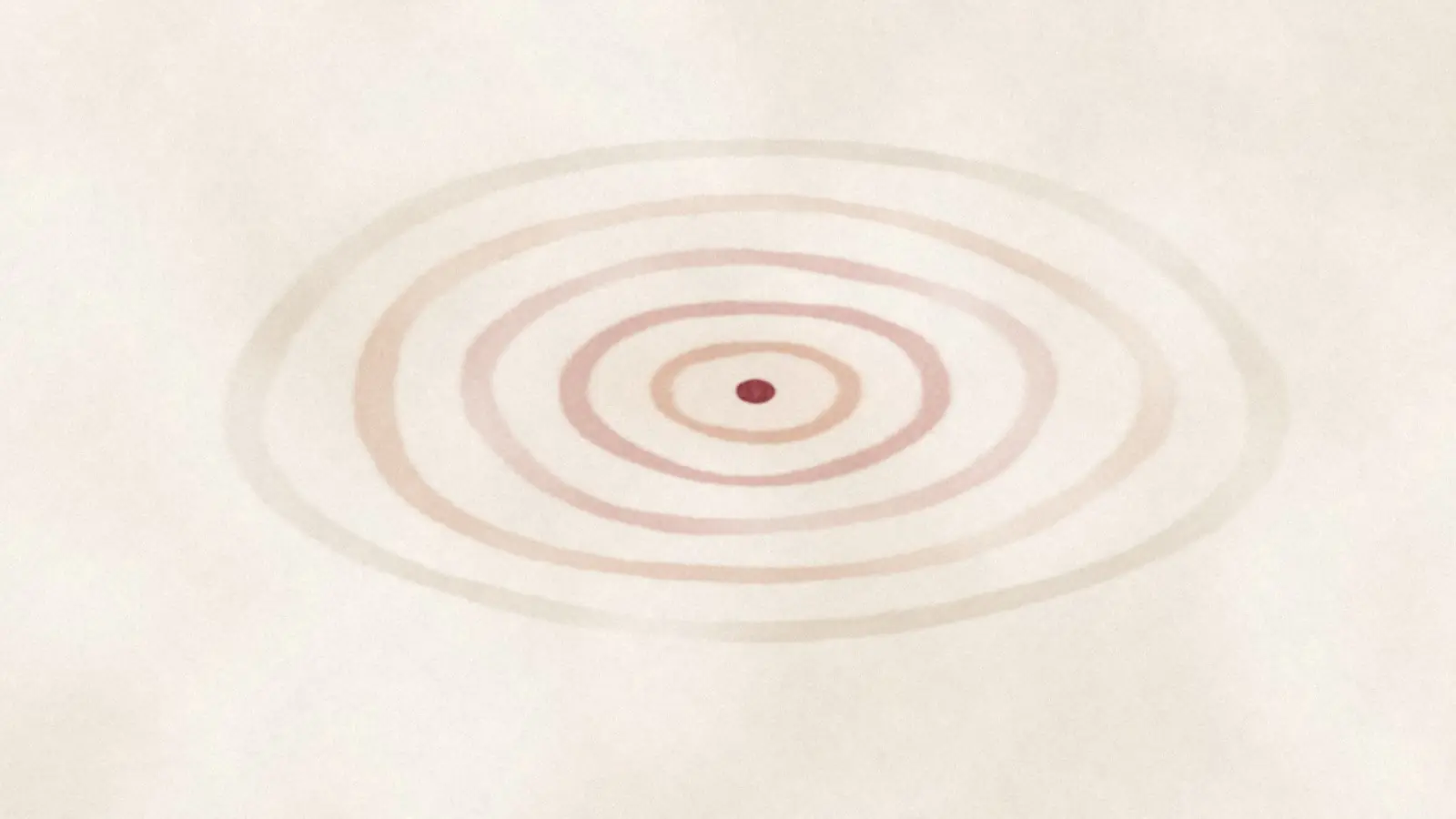
About the artwork: One light point of contact, and the ripples spread on their own. Nothing has to brace. The body decides what to release.
Most people who come to see me have never heard of CranioSacral Therapy. A doctor or a friend referred them, and some arrive expecting a massage, or something like one. Then they notice they’re still fully clothed, feel how light my touch is, and wonder what I’m doing.
CranioSacral Therapy isn’t massage
That’s one of the reasons I like to explain how I work. CranioSacral Therapy doesn’t come from massage. It has its own history, which I’ll write about in a future post.
I’m not trying to change your body
One of the first things I tell new clients is that my goal isn’t to change or influence their body. If I push for a change, I become one more stimulus your body has to deal with.
There’s another reason. When I notice tension or stimuli in the body, I don’t know whether it’s the primary spot or a secondary one. Your body is always counterbalancing. When one area holds tension, other areas adjust to keep you upright and moving, and over time those adjustments can hold tension of their own. So the spot that feels tight may be where the strain started, or it may be where your body is compensating for something somewhere else.
If I try to force a release, your body may start to fight me. That creates new problems instead of releasing the old ones.
Why light touch helps your body relax
I use light touch so your Physical Body doesn’t feel it needs to resist to protect itself. When a body braces against touch, I think of that as a sympathetic response. It’s protecting itself.
Light touch lets the body relax instead. That’s why I think of light touch as working with the parasympathetic side, the side of the body that rests.
Once your body feels safe, it can register the intensity it’s been holding and begin to release it. That might happen at the primary location or a secondary one.
I remember a session where I was working in the pelvic area, and my client’s left arm began to move up above her head. She said, “I’m not moving it. It’s moving on its own.” I told her to let it move. Her body was working on releasing something, so there was no need to stop it. Just Notice What You Notice.
Your body gets to decide, not me.
After your session
Each client experiences the time after a session differently, depending on what brought them in. Some people notice a change right away. Others don’t, which is why I ask everyone to notice what they experience over the next two days.
Just because you’re off the table doesn’t mean the session is over. Your body has released, and it’s finding a new balance, a new level of homeostasis. Your 4 Bodies are still adjusting.
On rare occasions, someone feels a little worse for a day or so. I see that as part of the release: an area that was once restricted now has a range of motion it isn’t used to yet.
I think of pain and discomfort as your body saying, “I’m out of balance, and I need something to change.” It isn’t specific about what needs to change. But understanding the process makes it easier to listen, even when your Mental Body can’t fully understand the whole message.
I also encourage clients to think of the practitioners in their life as tools. You get to choose which ones help you reach your goals. It takes a village to raise a child, and it takes a village to help us stay healthy, too. If something doesn’t ease, that may be the time to bring another member of your village in.
If you’d like to see a session from start to finish, here’s what a session is like. And if you’ve been referred and aren’t sure CST is right for you, you’re welcome to text or email me. I usually reply within a day.